
Education and Household Finances
Using 2022 Survey of Consumer Finances data, this page compares earnings, income, and wealth across education levels. It also examines how sources of income vary with education and how much inequality remains within each group.
Earnings, income, and wealth by education
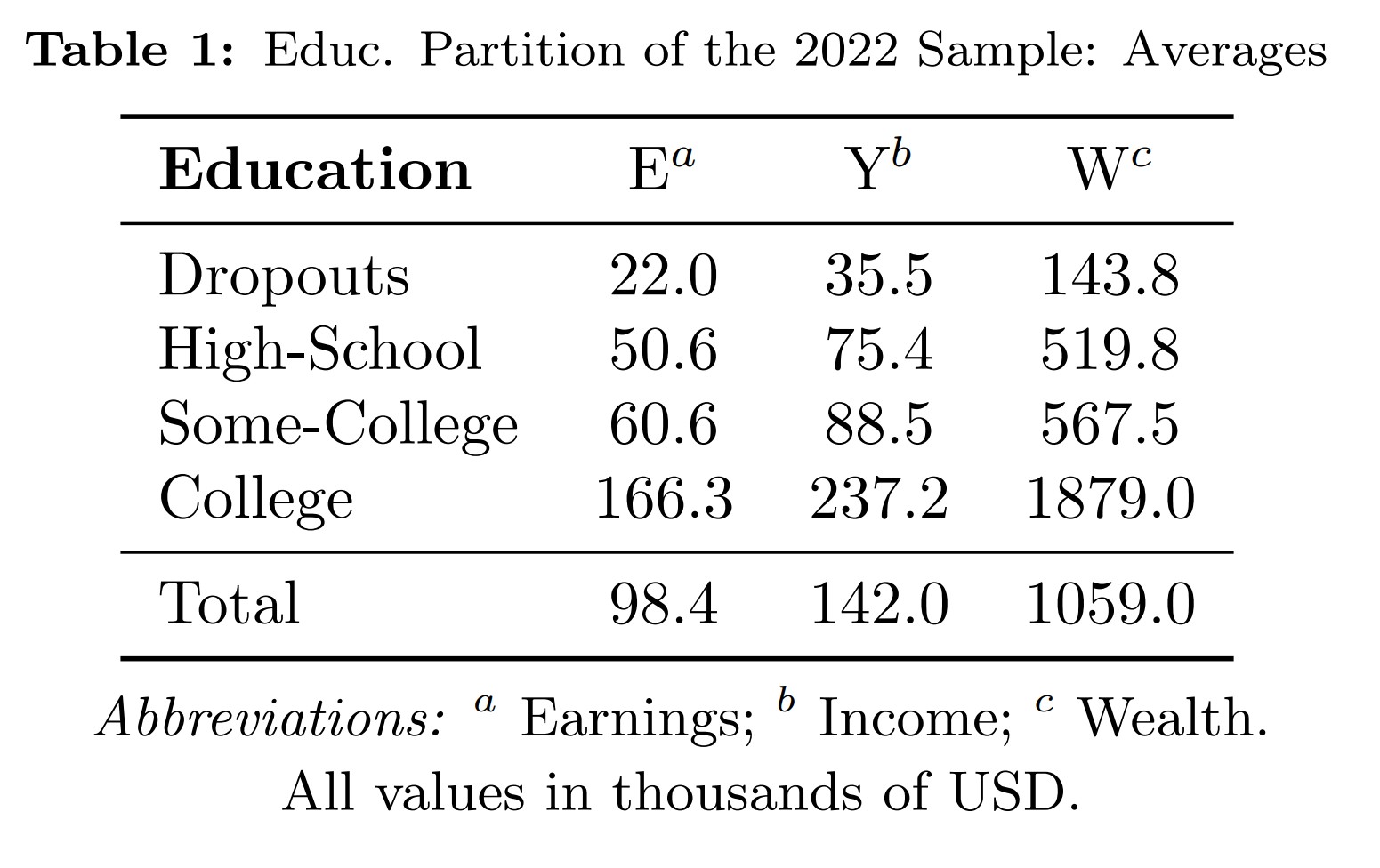
The gap between high-school dropouts and graduates is particularly striking, with high-school completion associated with approximately double the earnings and income, and triple the wealth. While attending some college brings only modest gains relative to a high-school diploma, completing a college degree marks the largest divide. Table 1 confirms that earnings, income, and wealth all increase substantially with education. College graduates, who make up 40.5% of households, earn on average more than three times as much as high-school dropouts, receive nearly seven times more income, and hold about thirteen times more wealth.
Income sources by education
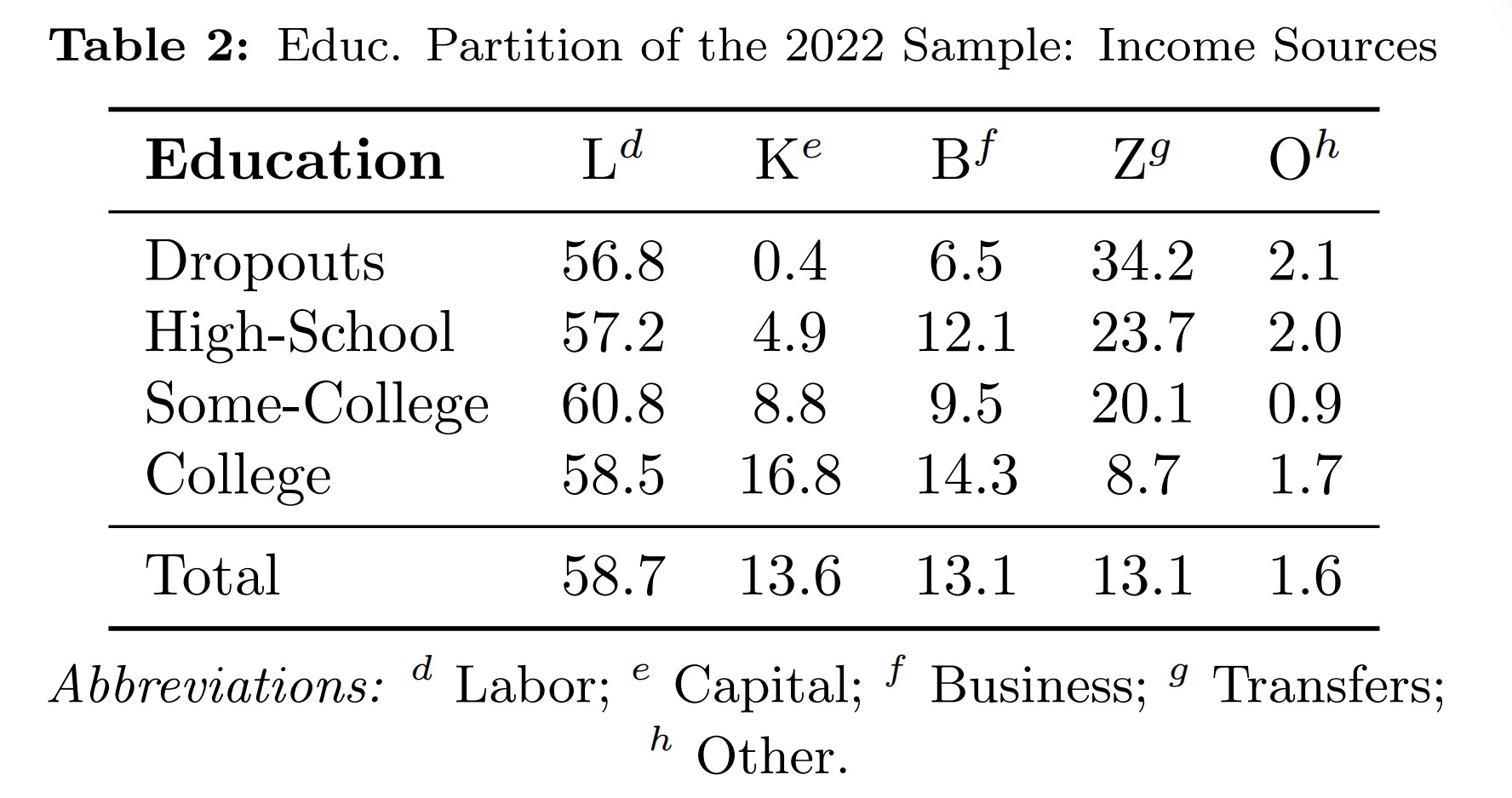
Labor income accounts for a similar share of total income across all education groups, at around 60%. However, other sources of income vary considerably. Table 2 shows that capital income, which comes from assets such as savings and investments, increases steadily with education, rising from almost zero among dropouts to nearly 17% among college graduates. Transfer income, including government benefits, follows the opposite pattern, falling from 34% to less than 9%. Business income does not increase consistently with education, but it reaches its highest level among college graduates.
Within-group inequality by education
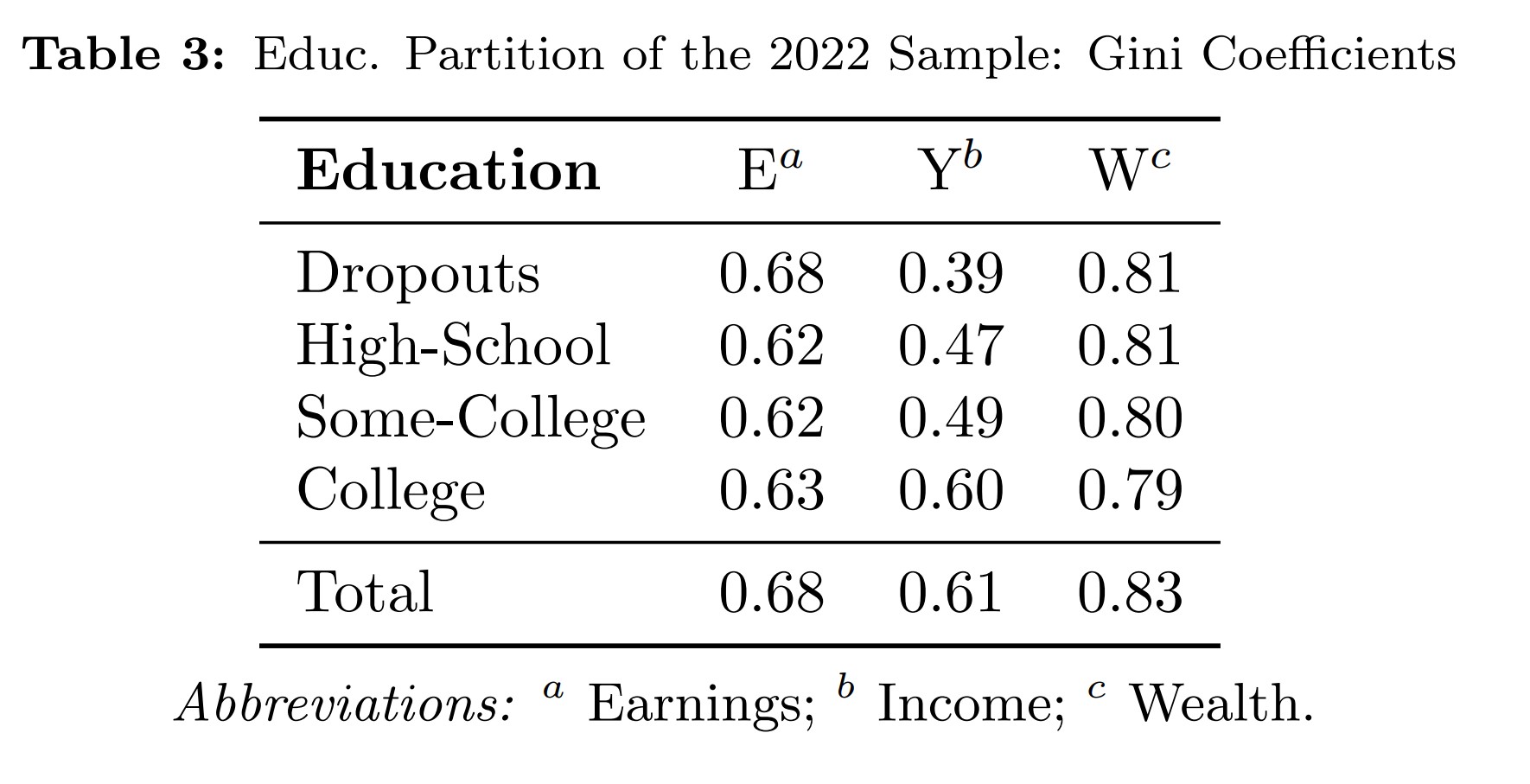
There exists substantial inequality within every educational group. Earnings and wealth are unevenly distributed regardless of education level, with only small differences across groups. Income inequality, however, rises with education. Table 3 shows that college graduates have the highest income Gini coefficient (0.60), reflecting a particularly wide range of financial outcomes among degree holders.