
Saving Motives
Using data from the Survey of Consumer Finances (SCF+), this page examines why U.S. households save. It compares saving motives across the income and wealth distributions, traces how they vary over the life cycle, and shows how they have changed over time.
Savings motives by income an wealth
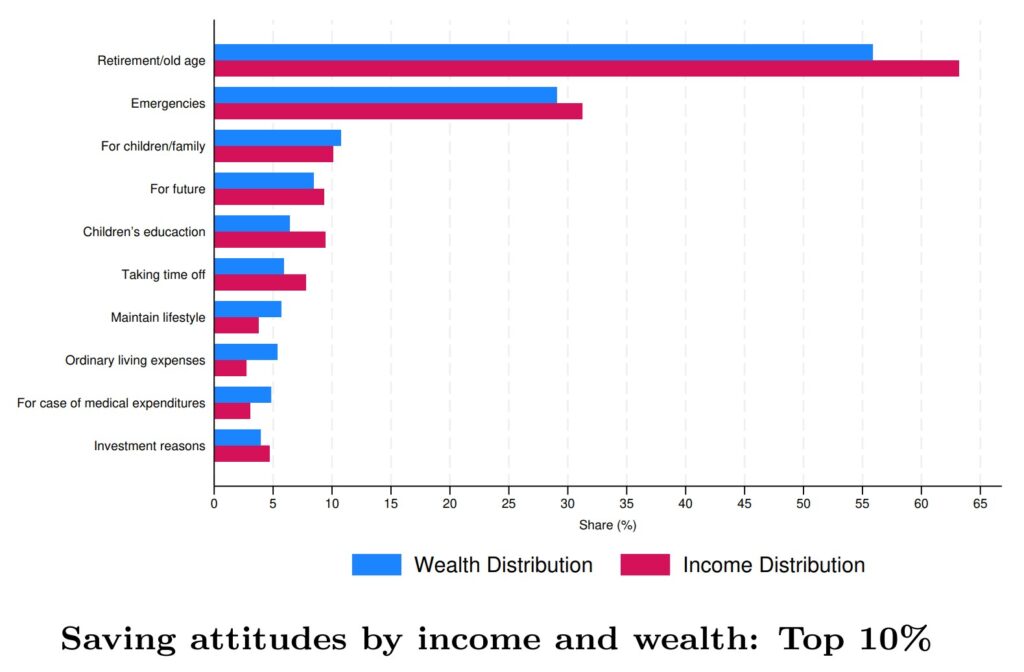
Regardless of households income and wealth, emergencies and retirement are the two most important savings motives. However, their relative importance changes. Whereas only one out of five households in the bottom 50% of the income or wealth distribution mentions retirement as a savings motive, it is more than half of all households in the top 10% of the income and the wealth distribution. Those in the middle (50%-90%) are in between with slightly below 50% of households reporting retirement as a savings motive. By contrast, two out of five households mention emergencies as a savings motive at the bottom of the distribution. Interestingly, there is very little difference between the groups along the income and wealth distribution although these groups differ in some dimensions substantially.
Savings motives over the life cycle
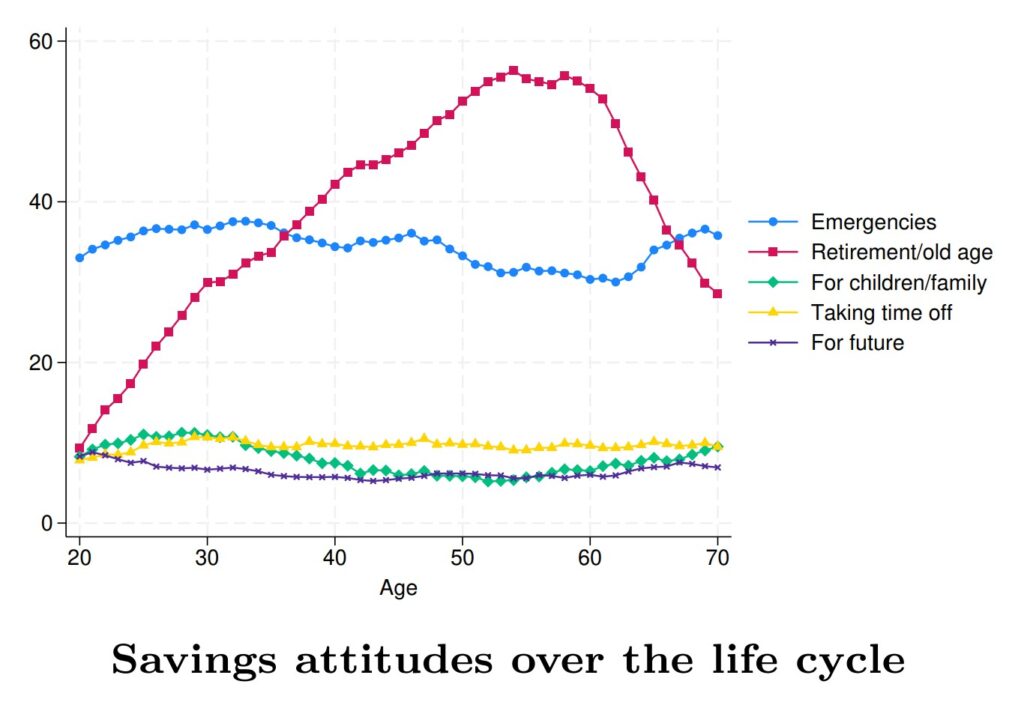
Emergencies and retirement are always the two most important savings motives in terms of how frequently they are reported by SCF participants. However, their trends differ substantially. Whereas emergencies show a slightly declining trend between age 20 and 60 before increasing again in retirement age, retirement as a savings motive shows very strong life-cycle variation. From one out of ten households mentioning it as a savings motive at the beginning of the life cycle, it is almost six out of ten households at the peak of the profile at age 50.
Time trends in savings motives
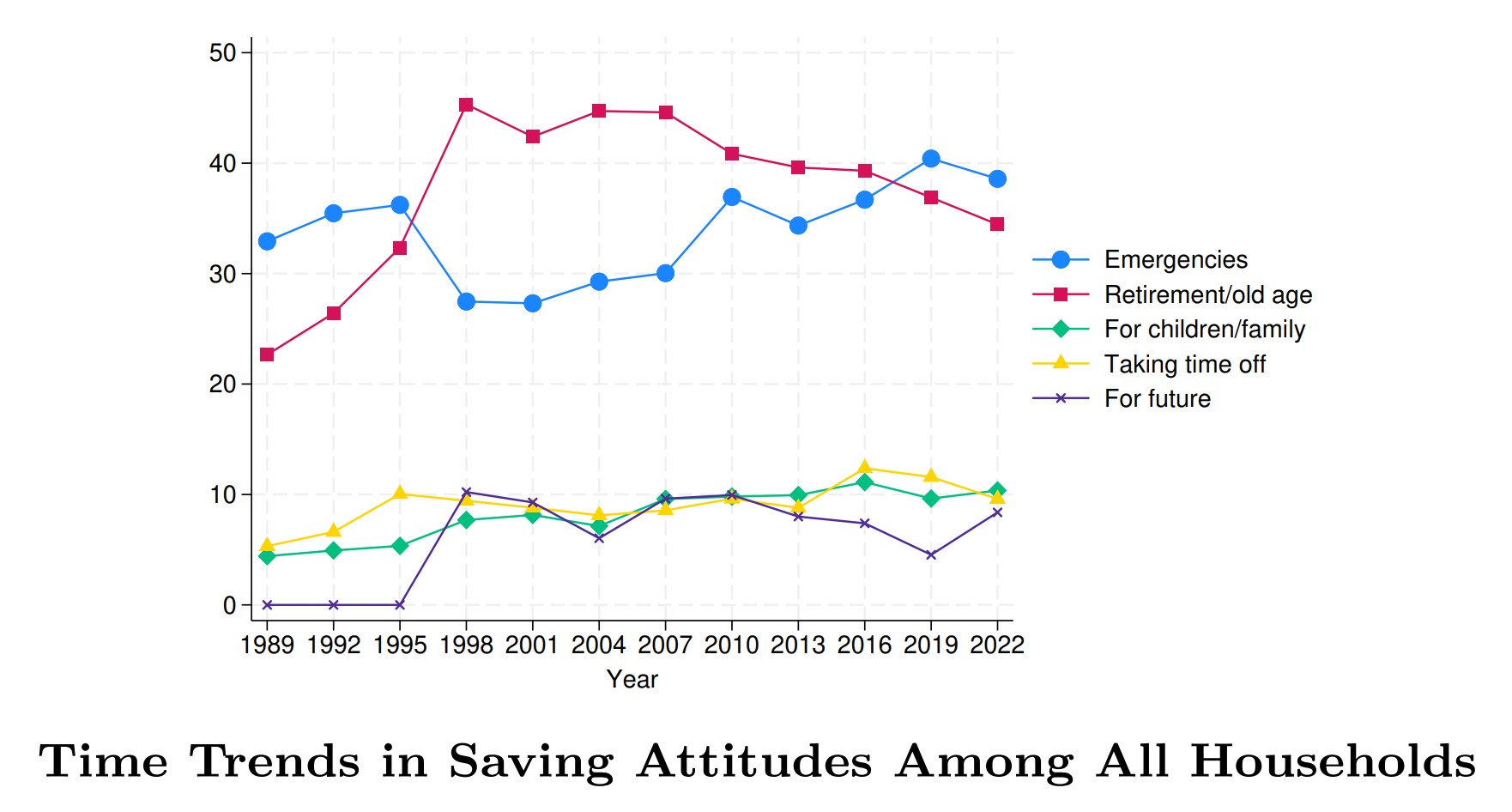
Emergencies and retirement have consistently been the main saving motives over the past three decades, though their relative importance has evolved. The importance of retirement increased from about 20% in 1989 to around 40% after the 2000s, in line with the rise of defined contribution plans. However, since the early 2000s, a reversal appears: emergency savings have gained importance while retirement motives have declined. This shift may reflect population aging, particularly the changing life-cycle saving needs of the baby boom generation.