
Family, Children, and Inequality
Using 2022 Survey of Consumer Finances data, this page compares earnings, income, and wealth across family types. It examines differences by marital status, dependents, and gender among single households, as well as the relationship between children and financial outcomes after accounting for age.
Single households: Dependents and gender
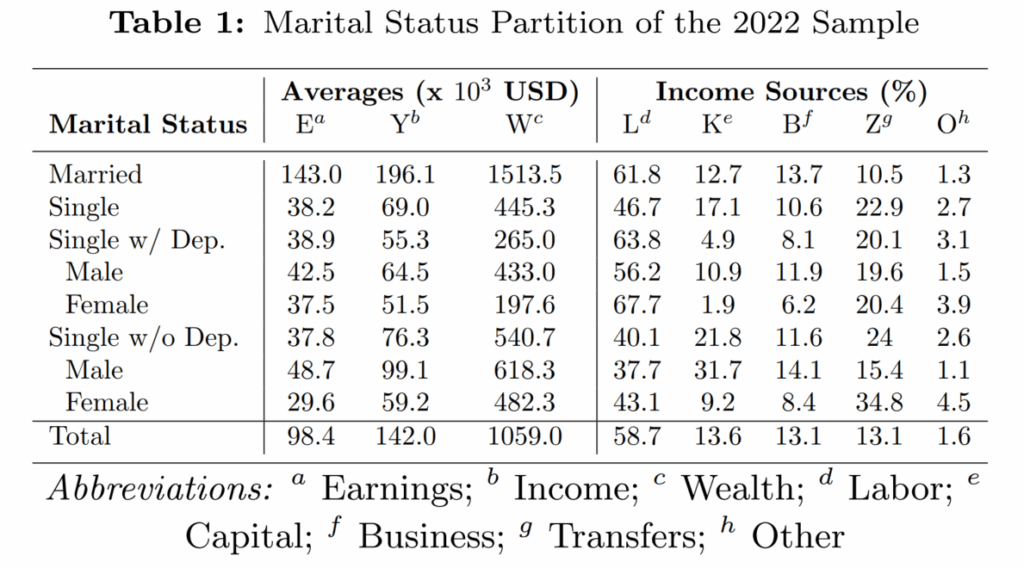
The study distinguishes between singles with and without dependents. Singles with dependents represent a financially vulnerable group. Despite household sizes approaching those of married couples, they possess substantially fewer resources across all measures. These households receive 20% of their income from transfers, double the rate of married households. Among singles without dependents, significant gender disparities emerge. Male-headed households possess approximately 50% more earnings, income, and wealth than their female counterparts. Income composition reveals further differences: single males derive 32% of income from capital sources, while single females receive 35% from transfers. This pattern likely reflects demographic differences, including greater longevity among women resulting in more widows.
Family status, children, and income distribution
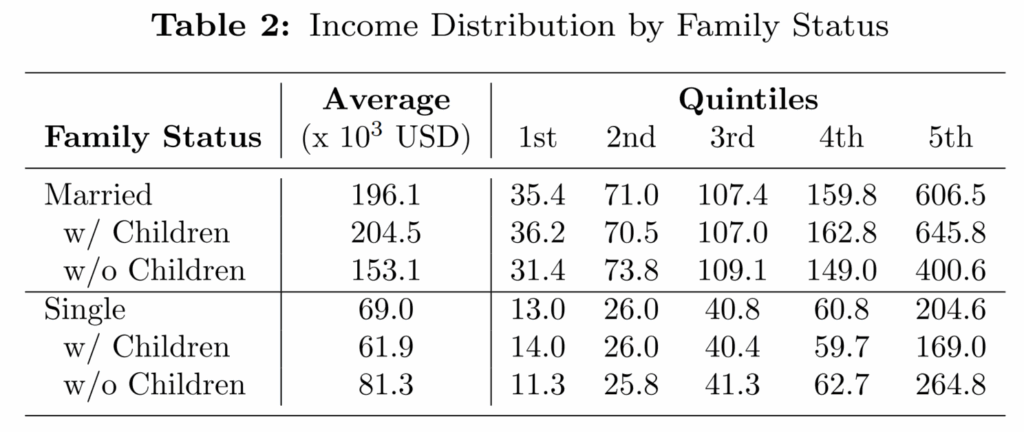
The SCF also records children not living in the household. This additional information allows us to consider households with and without children regardless of whether those children still live at home. Table 2 summarizes the differences in income of different family types. Married households with children have higher incomes than married households without children, but the reverse is true for single households. These differences are mostly the result of differences in the top quintile, where those with children have 60 percent higher income than those without.
Number of children by quintile and age
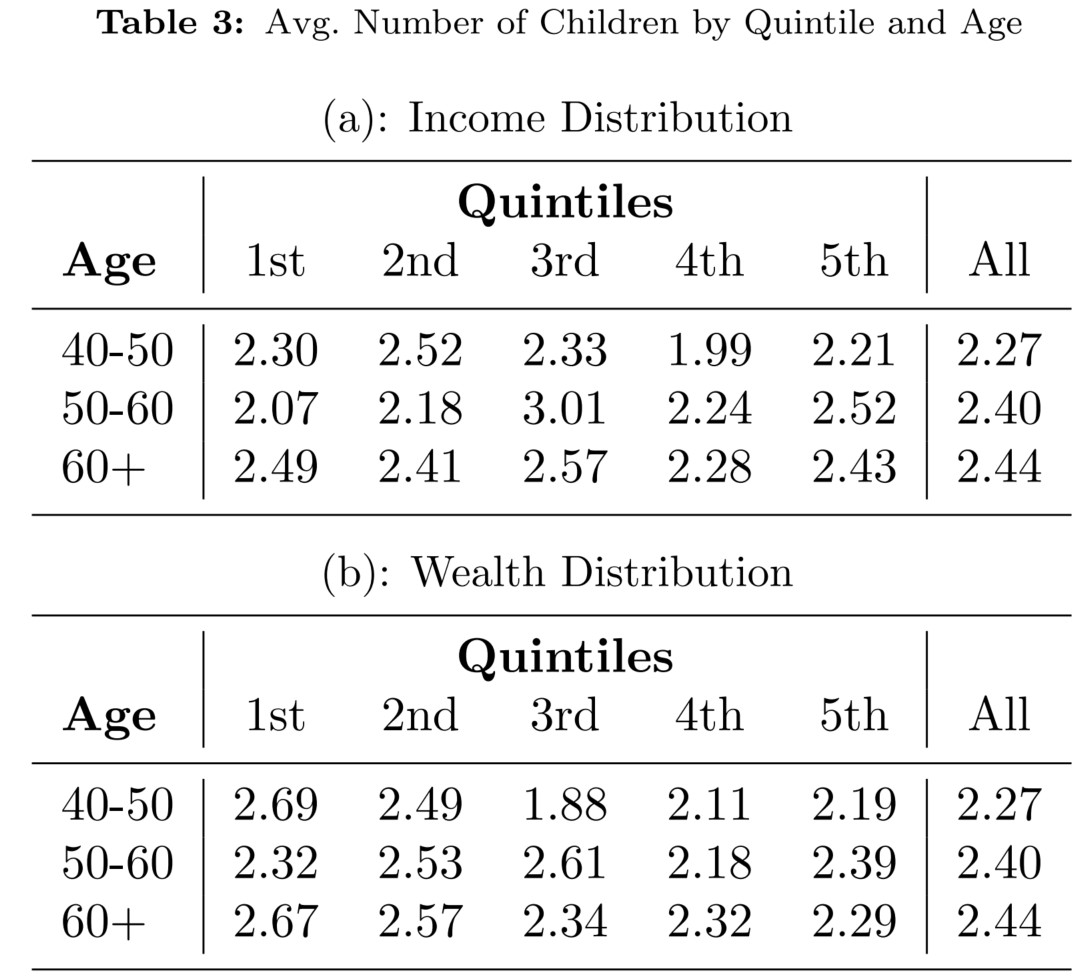
Table 3 reports the average number of children across income and wealth groups while accounting for differences in age. The top panel of Table 3 shows no clear relationship between income and the number of children once age is taken into account. The relationship with wealth is slightly different. Households higher in the wealth distribution tend to have somewhat fewer children on average. One reason for lower positions in the wealth distribution for households with more children could be financial investments in children.